

The controls in this guide require the Org admin role. Open
Organization → Floor terminals to manage devices and Organization →
Users to manage employee PINs.
Understand the terminal list
Each terminal card shows:- its name and Imaging and washout work area;
- lifecycle status and current connectivity;
- location and optional default equipment;
- current worker, or Locked when no worker is signed in;
- last-seen and paired times;
- the administrator who approved it.
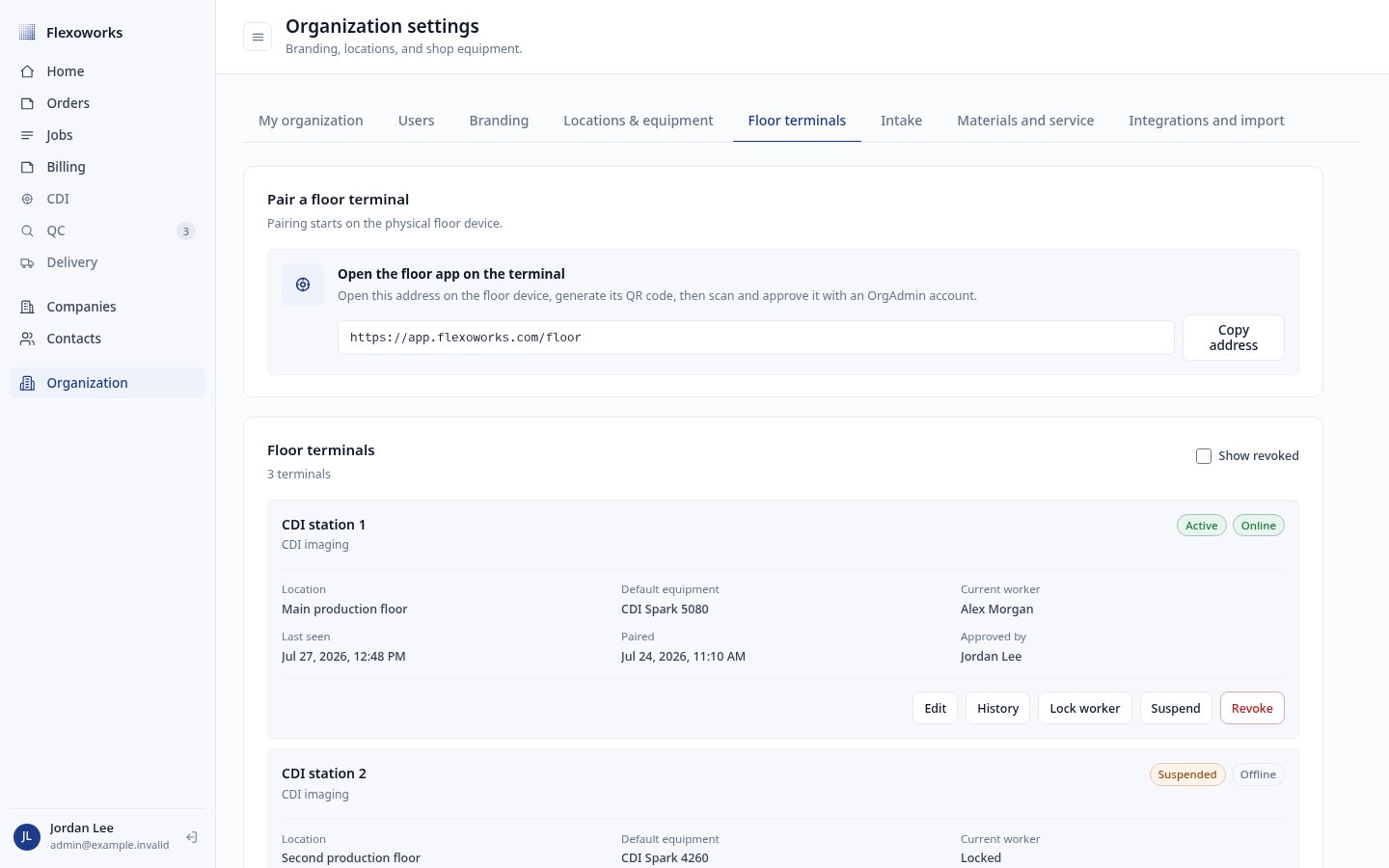
The Floor terminals tab separates device status, connectivity, assignment, and current worker.
Online and Offline are separate from lifecycle status. Online means the
recorded last check-in was during approximately the previous two minutes.
Offline does not by itself mean that pairing was lost. The list refreshes in
the background about every 30 seconds.
Revoked terminals are hidden initially. Select Show revoked when you need
to review them or open their history.
Edit terminal configuration
Select Edit to change:- the terminal name;
- its location;
- its optional default equipment.
Review terminal history
Select History to open the terminal’s append-only activity history. Events are shown newest first, 20 at a time. Select Load more for older entries.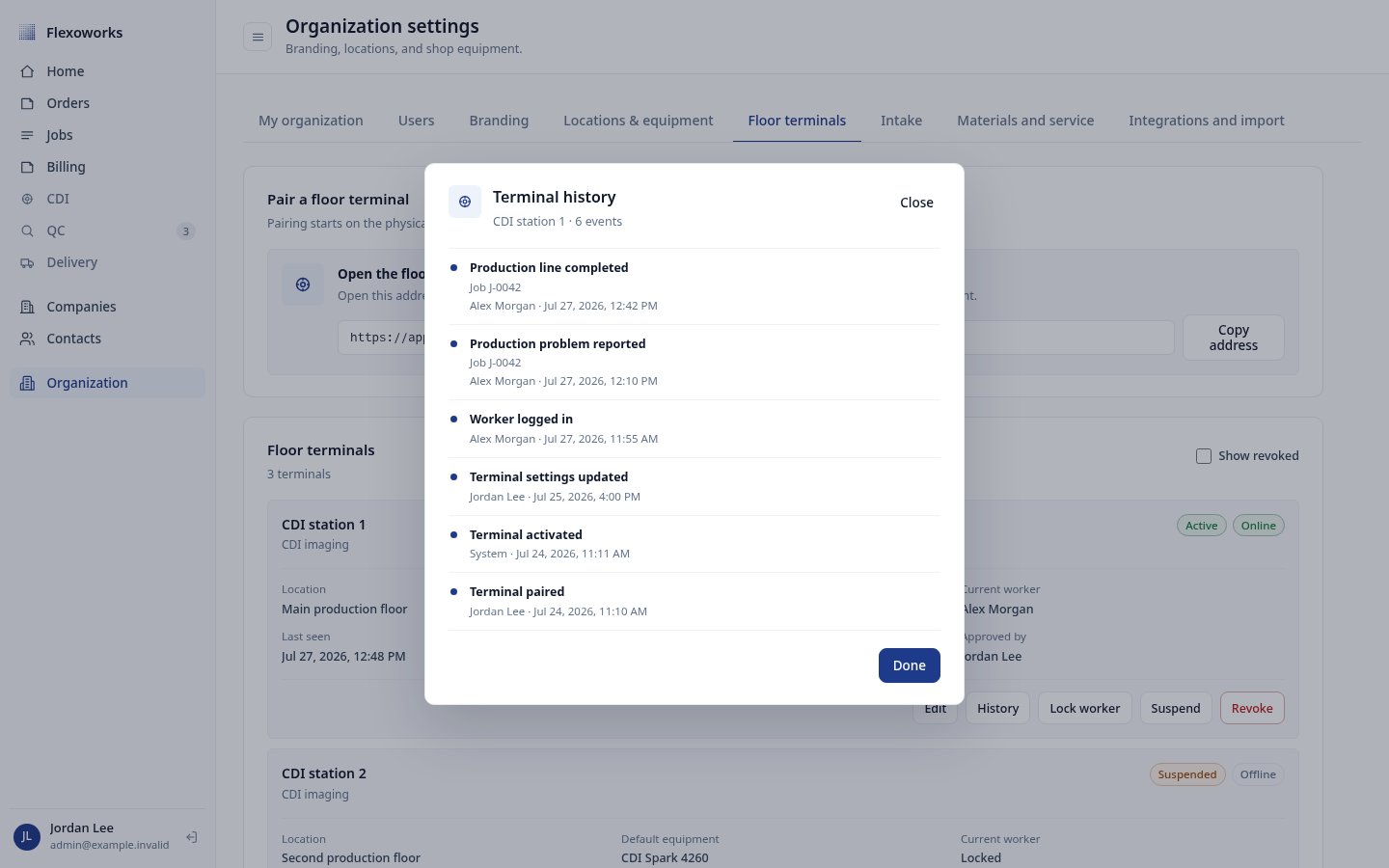
Terminal history records device, worker, and production actions with actor and time.
- pairing and activation;
- setting changes;
- remote worker locks;
- suspension, resume, and revocation;
- worker login and worker lock;
- historical production-line completion and undo;
- historical production problem reports;
- terminal or organization PIN-entry lockouts.
Lock the current worker
Select Lock worker when a worker left the terminal unlocked or when a shift changes. Confirm the action.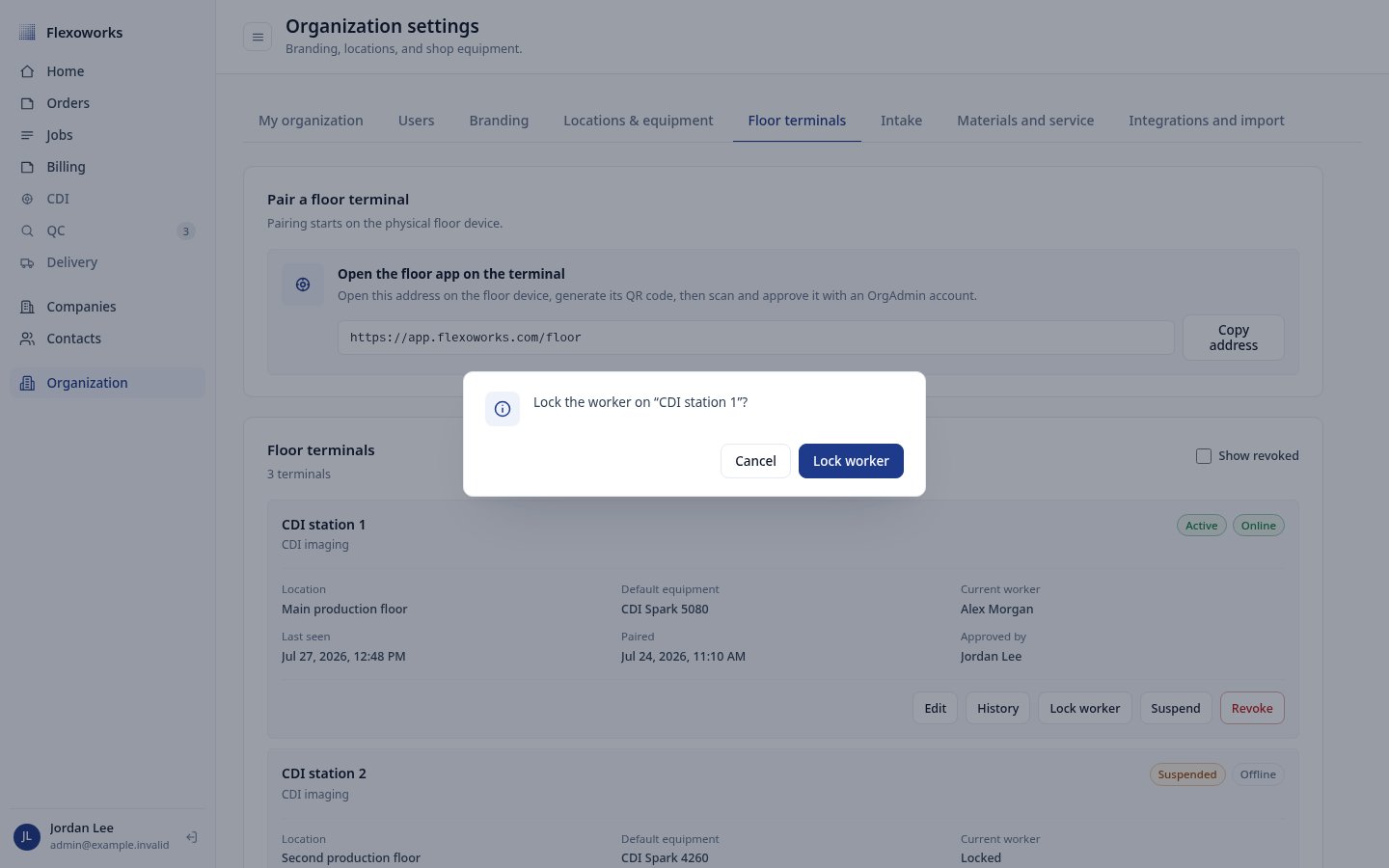
Remote lock ends only the current worker session.
- clears the current worker session;
- leaves the terminal active and paired;
- returns the device to PIN entry on its next check-in;
- does not disable the employee’s PIN on other terminals.
Suspend and resume a terminal
Use Suspend for a temporary device pause, such as maintenance or a security review. Confirm the action before it is applied.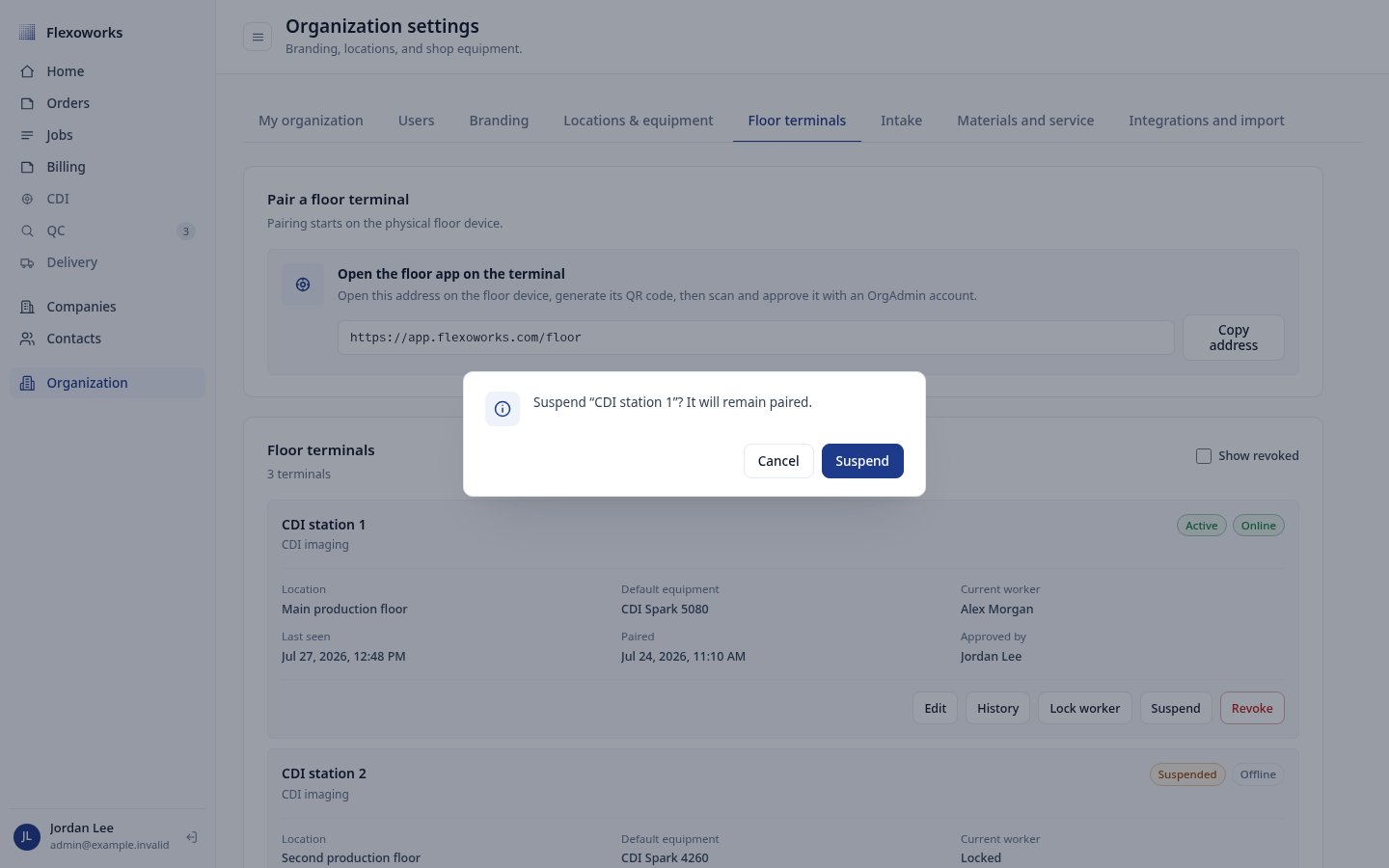
Suspension is temporary and explicitly keeps the terminal paired.
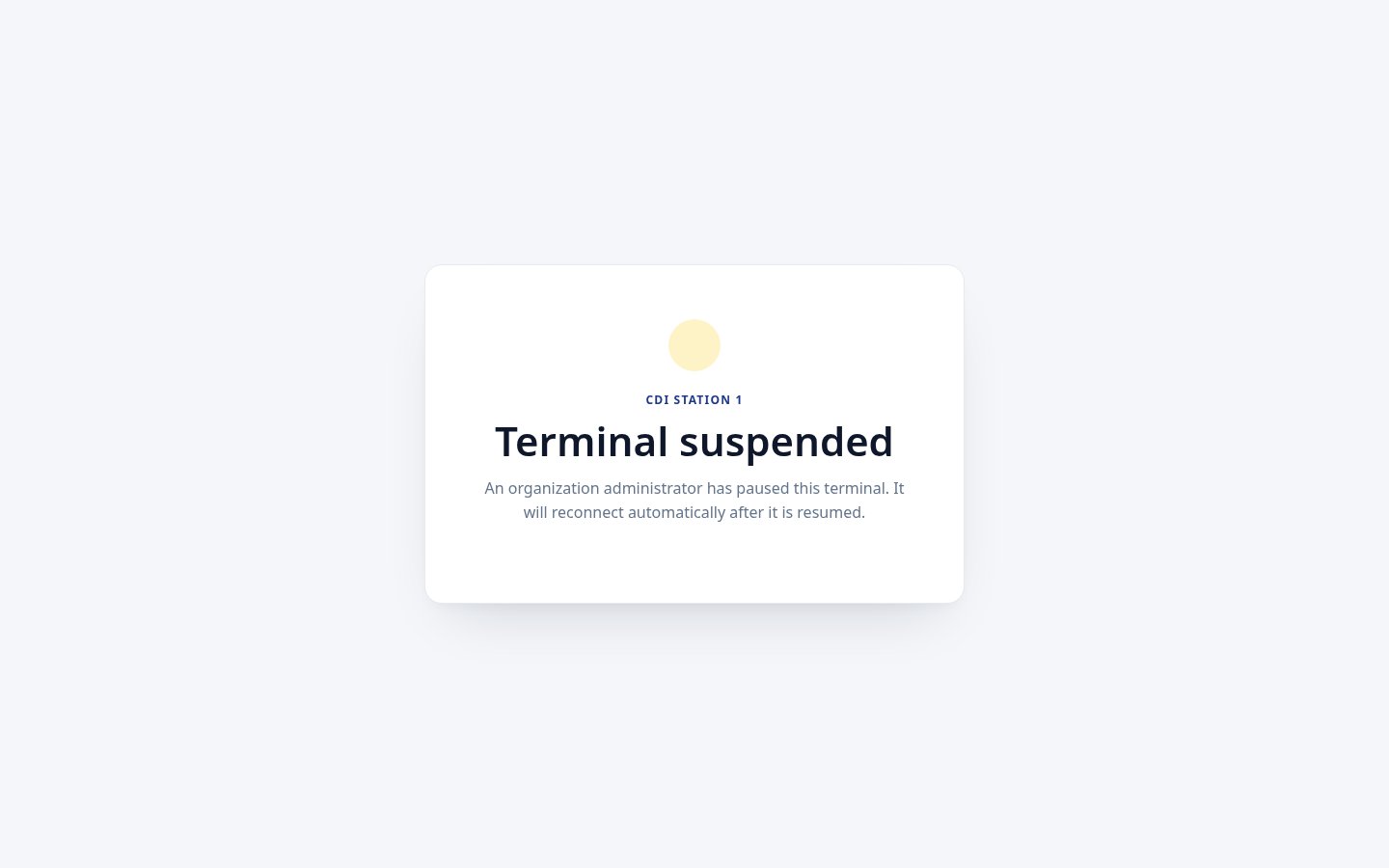
A suspended device waits for an administrator to resume it.
Revoke a terminal
Revocation permanently invalidates the browser’s current terminal enrollment. Use it when a device is retired, lost, replaced, reimaged, or no longer trusted. It is not the same as temporary suspension. Select Show revoked to include earlier revoked devices in the list.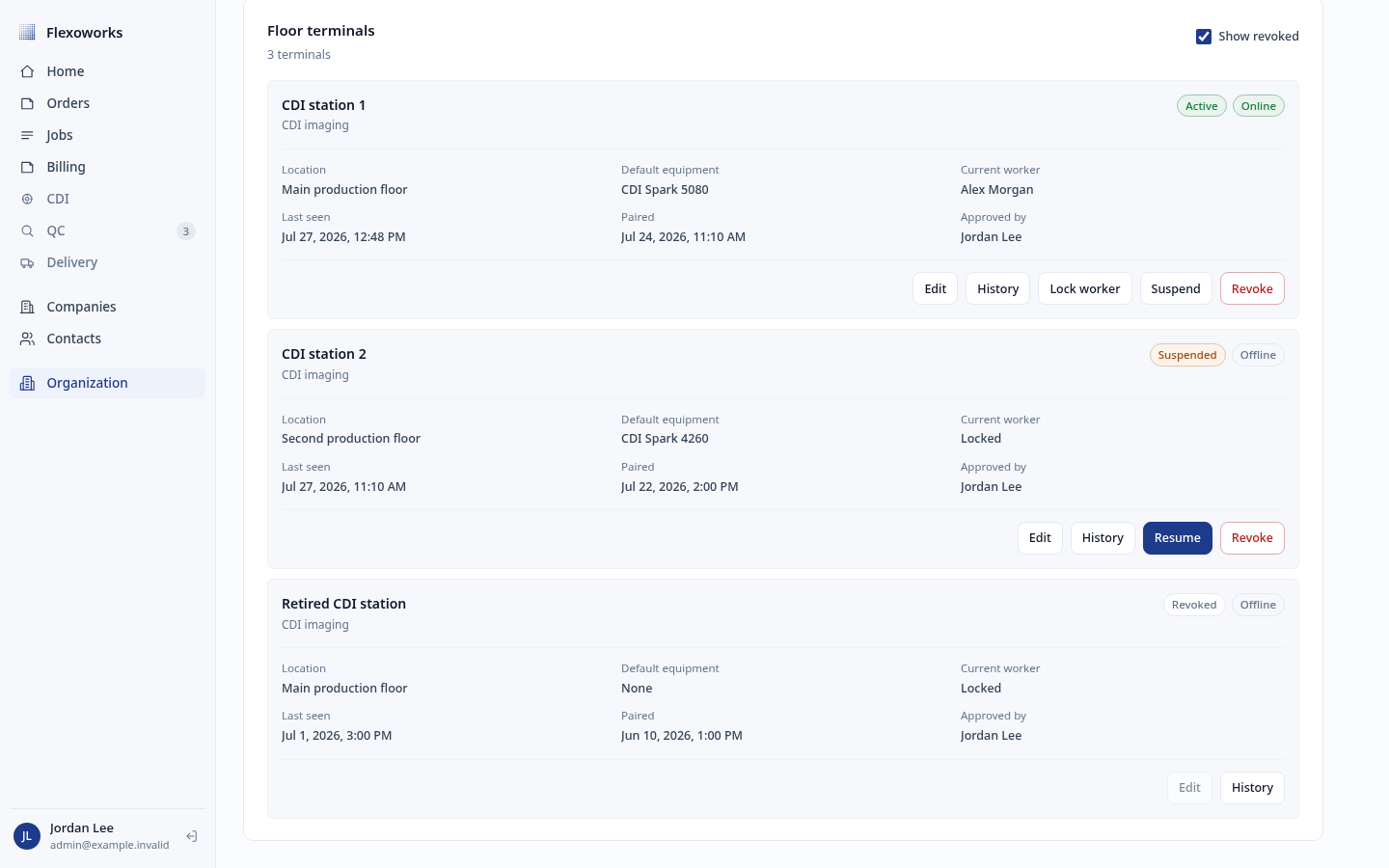
The Show revoked option keeps decommissioned terminals available for audit.
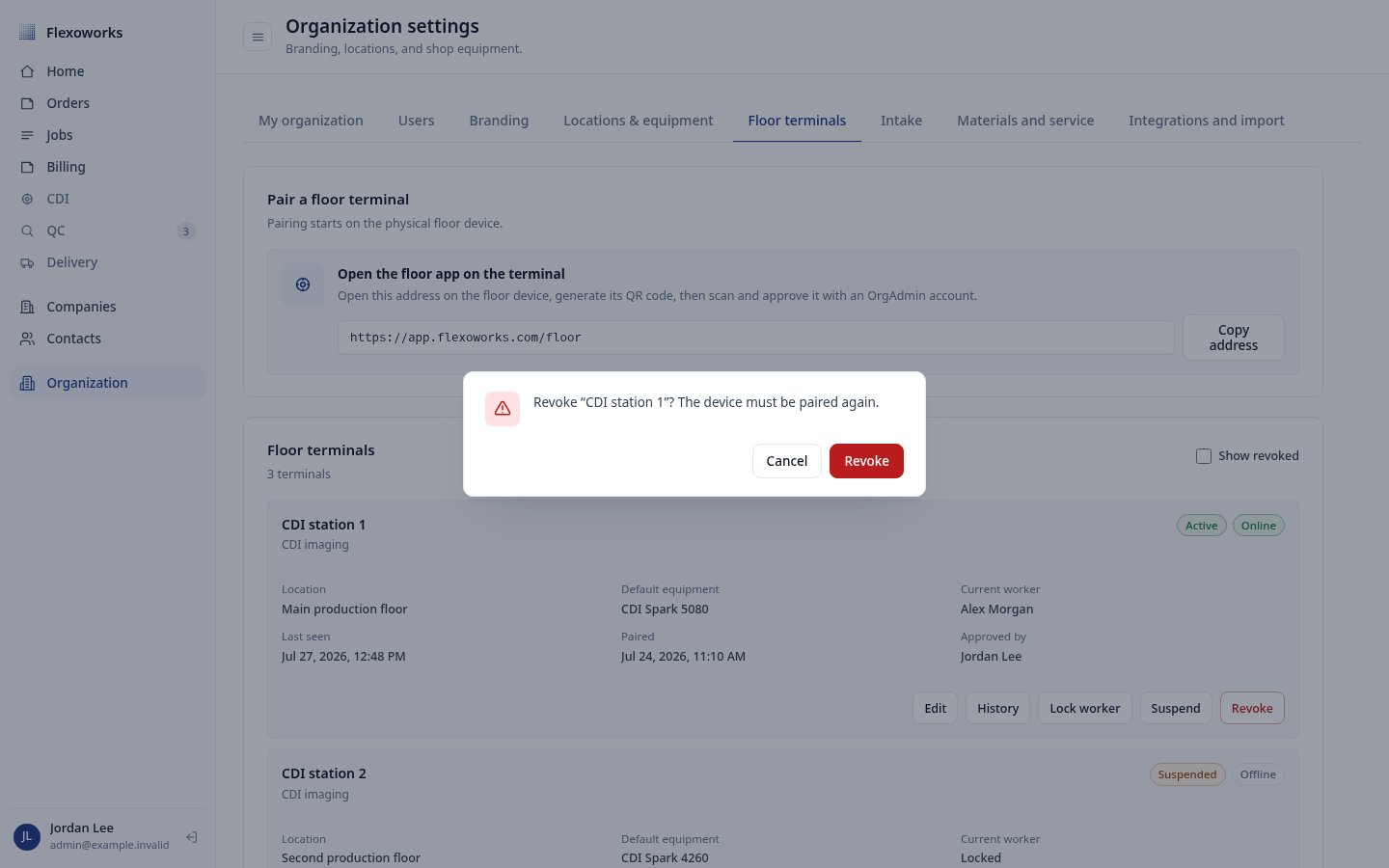
Revocation warns that the physical device must be paired again.
- clears the current worker;
- invalidates the terminal session and enrollment;
- cannot be resumed;
- keeps the terminal and history available under Show revoked.
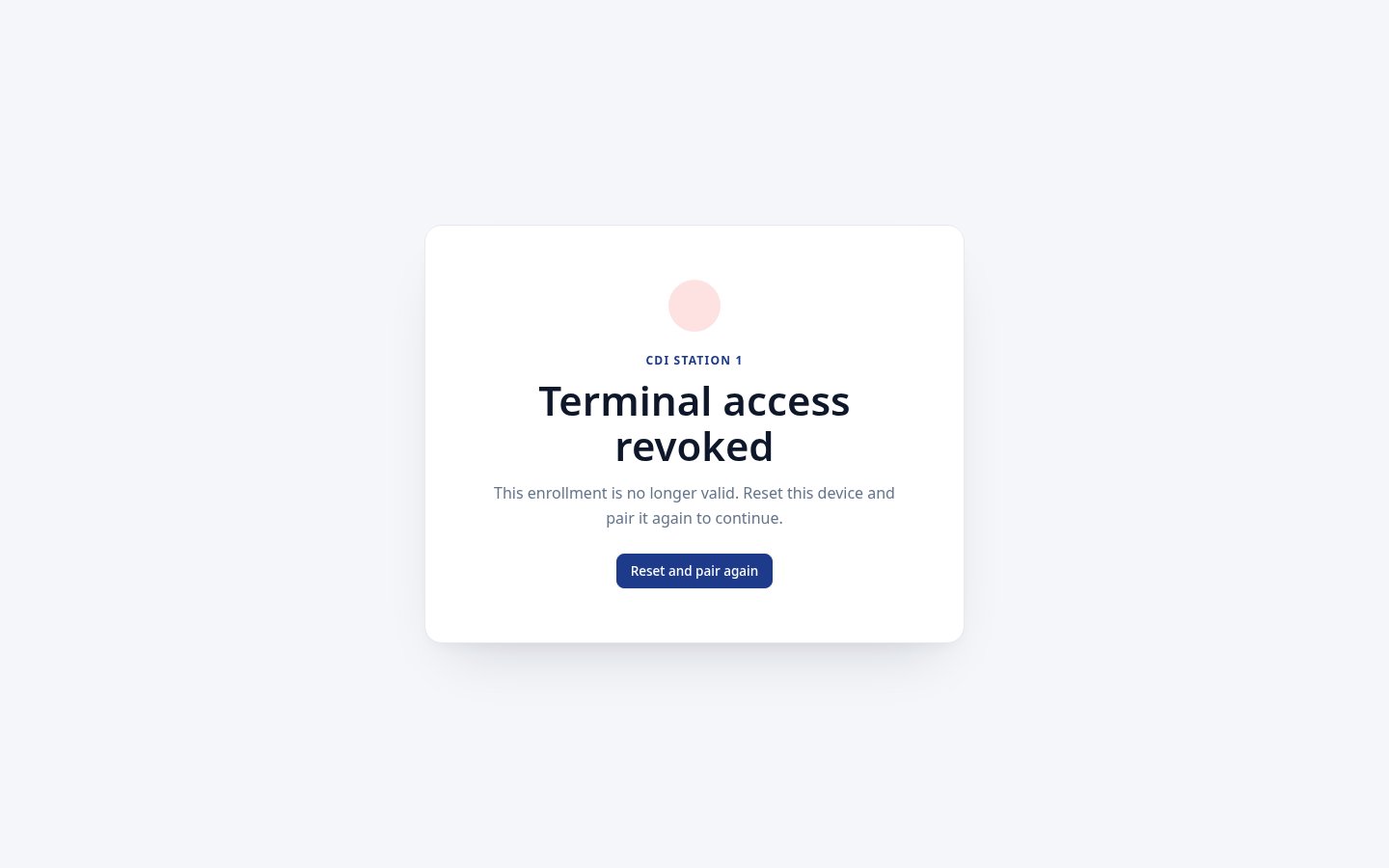
A revoked device must be reset and paired again before production use.
Manage employee floor PINs
Open Organization → Users, open a team member’s action menu, and select Manage floor access. The dialog shows:- whether floor access is enabled;
- when it was last used;
- the last terminal used;
- any current user-level temporary lock.
- Enable floor access by entering and confirming a unique four-digit PIN.
- Reset PIN by replacing it with another unique four-digit PIN.
- Disable floor access while leaving normal full-app login unchanged.
- Unlock a user-level temporary PIN lock without changing the PIN.
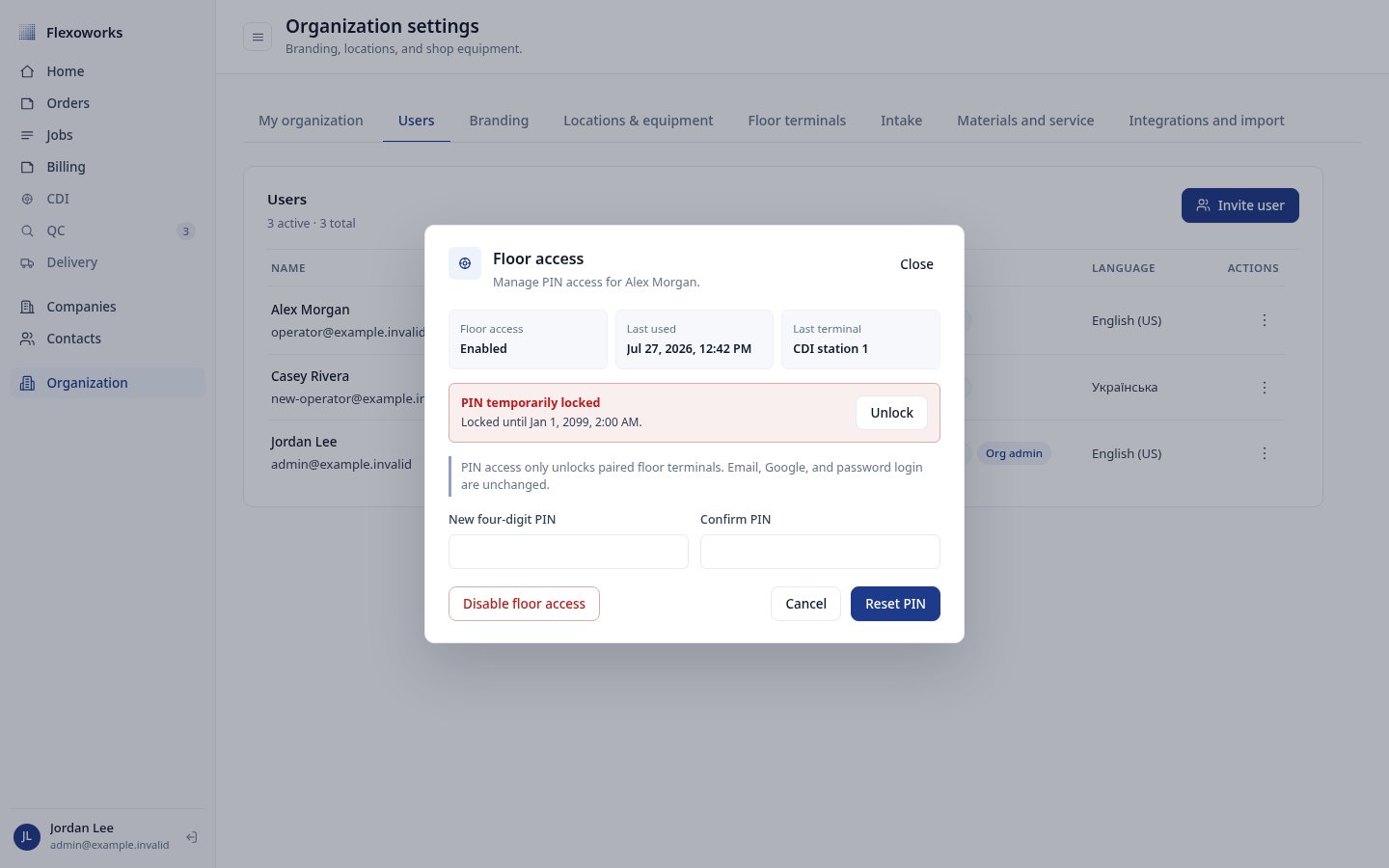
A temporarily locked employee PIN can be unlocked without changing full-app access.
Keep a production device paired
For a durable installation:- use a managed, persistent browser profile;
- allow cookies and site data for the Flexoworks app address;
- do not clear browsing data when the browser closes;
- always use the same Flexoworks hostname;
- let the device reconnect after power or network outages before changing its administration state.